Work / In-house systems
In daily pricing and shipping decisions,
only the decisions the system cannot make go to a person.
Every day we gather what pricing and shipping depend on, and leave only the items a person needs to see. The system totals and stores the rest. Every decision that commits money stays with a person.
01
What we handed to the system
This covers our own stock and the online shops where we list it. The same item sells for different prices on different marketplaces, so where to list it and at what price is a decision we make again each day. The system assembles the material for that decision, and a person makes it.
02
What runs inside the company
Collecting prices
An always-on program checks matching listings on Japanese marketplaces, eBay, and specialist trading card platforms in other countries. A single formula works out whether to buy and the price ceiling, and a person decides whether to bid.
Telling editions apart
The same card exists in more than one edition, and the difference sits in a few places on the image. The system reads the relevant parts of the card image to identify the edition, and falls back to the next check when it cannot.
Restarting what stopped
A job that hits an error restarts on its own, and we check every day for scheduled jobs that failed without telling anyone. Spending, legal matters, and access rights stay with a person.
03
How it runs
Daily
We collect prices and save a screenshot of each page at that moment.
August 2026
We began using the market board, which puts listings and completed sales on one screen, inside the company.
Records and rules
What the system processed goes into a daily log, and our internal rules define the scope and steps of each role.
04
The screens we watch
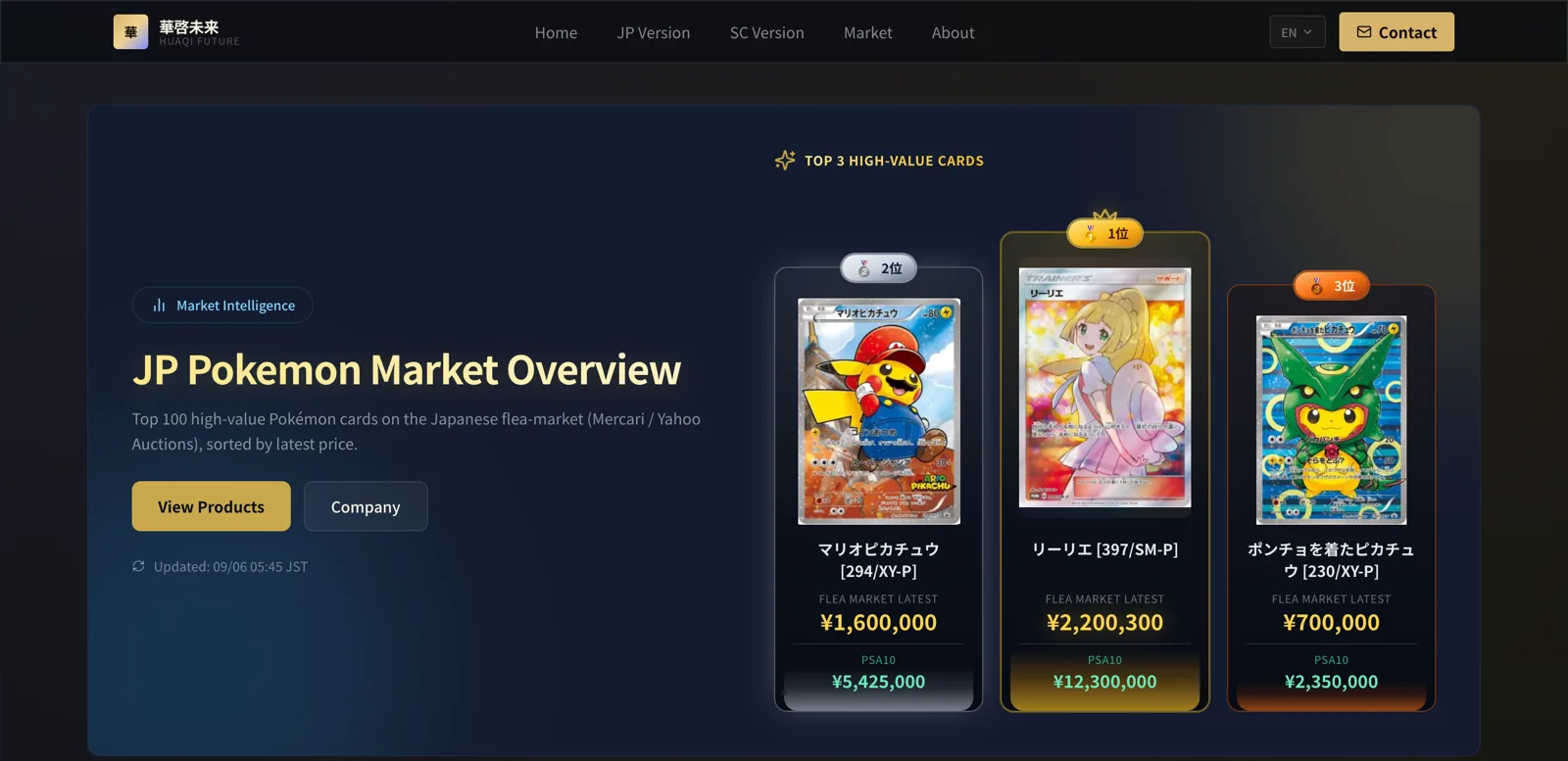
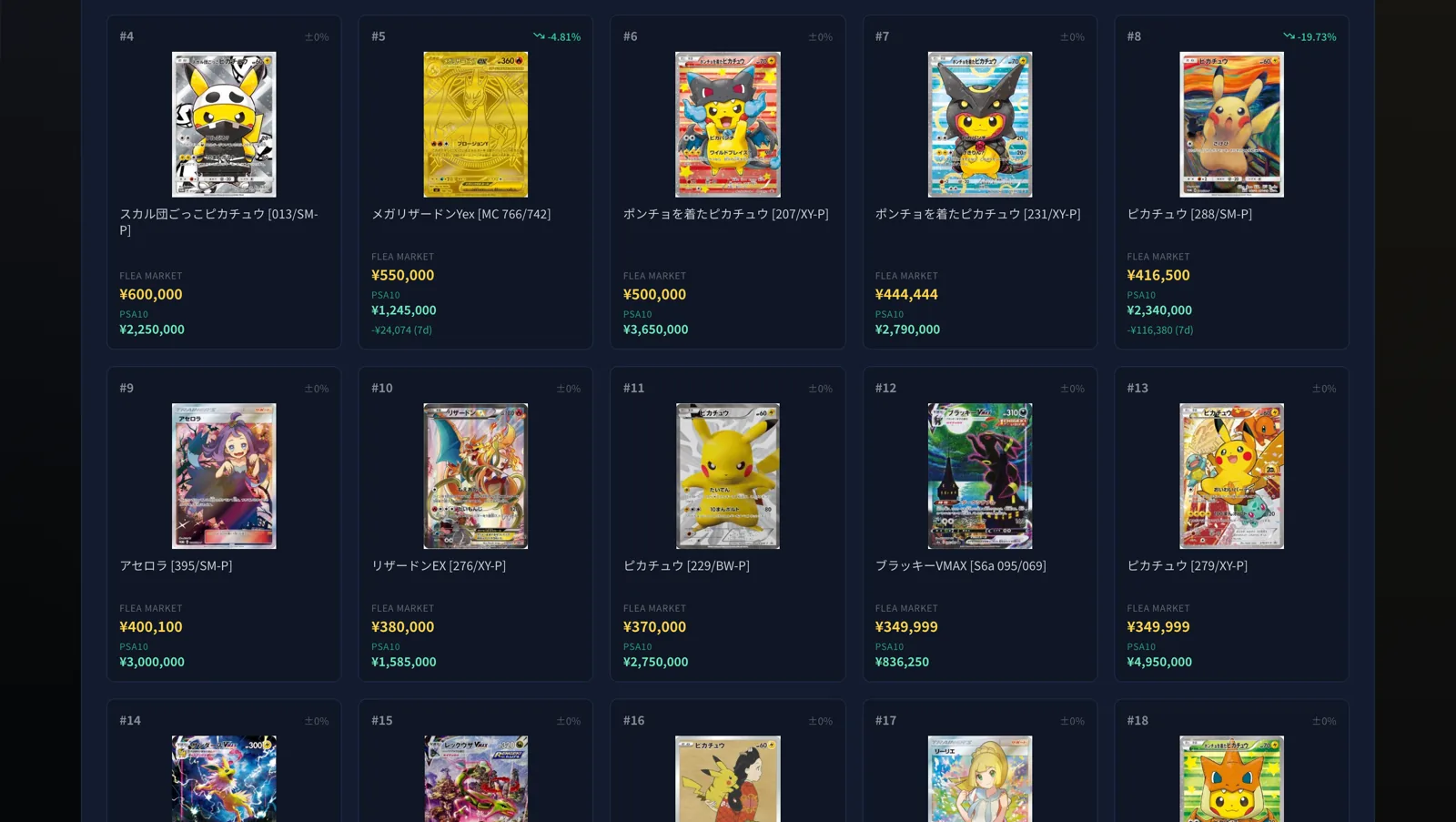
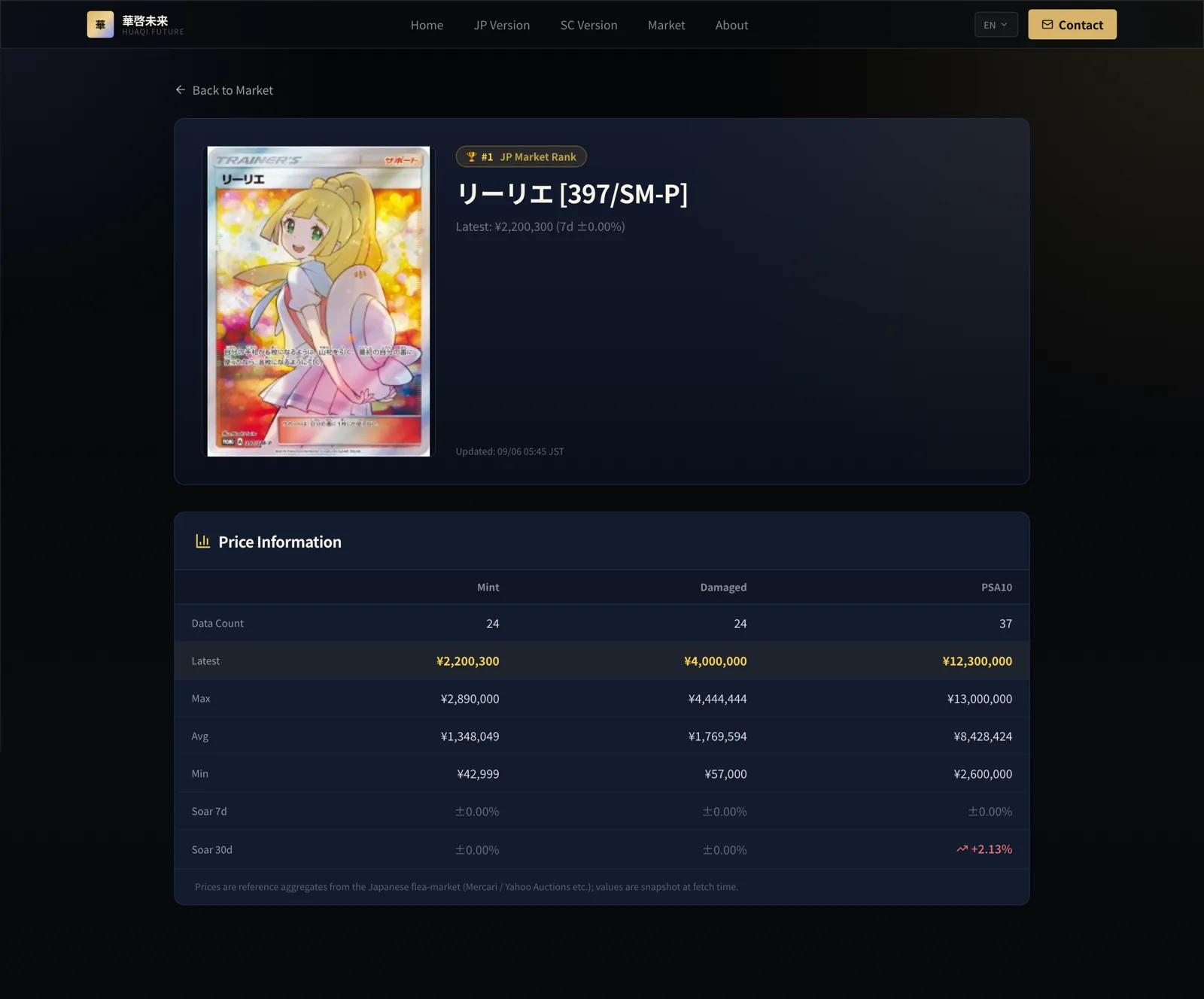
These are our internal market board and the public screens we build from the same data. The amounts shown are third-party reference prices for completed sales.